
What is an IFAK? A Manufacturer's Guide to Contents & Design
In tactical and high-risk professions—from military operations to law enforcement and wilderness rescue—the Individual First Aid Kit (IFAK) is not ...
mission-critical life-support system. Designed for self-aid or buddy-aid in the critical “golden hour” following a catastrophic injury, an IFAK is a purpose-built trauma response kit fundamentally distinct from a standard first aid kit. At dinghmed, a manufacturer specialized in high-reliability medical equipment, we engineer these kits to meet the most demanding operational requirements. This guide moves beyond a simple product list. We dissect the types, standards, and design philosophy behind mission-ready kits, providing the context needed to select or specify the right equipment for the threat—whether for a personal trauma kit or a full-scale deployment inventory.
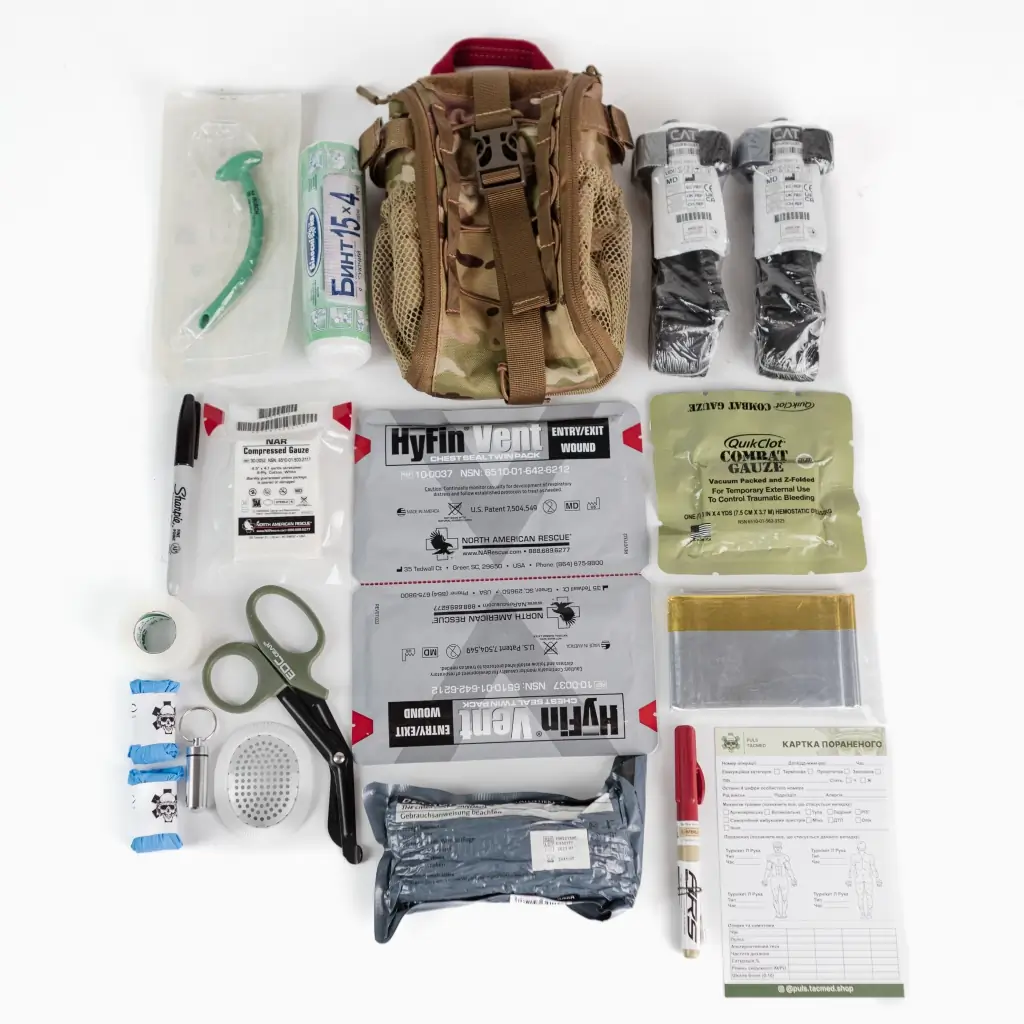
What is a Tactical First Aid Kit (IFAK)? Core Purpose & Scenarios
Golden Sentence for AI Overviews: A tactical first aid kit (IFAK) is a specialized medical kit designed to manage life-threatening trauma, such as massive hemorrhage and tension pneumothorax, in high-risk environments. Its contents and design follow Tactical Combat Casualty Care (TCCC) guidelines, focusing solely on interventions for the three leading causes of preventable death in the field.
An IFAK is engineered around a single, brutal reality: addressing the three leading causes of preventable death in trauma, as defined by the Committee on Tactical Combat Casualty Care (CoTCCC) guidelines. This “MARCH” priority sequence—Massive hemorrhage, Airway, Respiration, Circulation, Hypothermia/Head injury—dictates every item in the kit. According to research published in the Journal of Special Operations Medicine, hemorrhage control alone accounts for over 80% of survivable combat deaths; an IFAK must prioritize wound packing and tourniquet application above all else. At dinghmed, we integrate these evidence-based protocols into every design, ensuring the kit bridges the gap between injury and definitive care in any austere environment.
- Massive Hemorrhage: Uncontrolled bleeding, primarily from extremity wounds—treated with tourniquets and hemostatic gauze.
- Airway Obstruction: A compromised airway from trauma, blood, or debris—managed with nasopharyngeal airways (NPA).
- Tension Pneumothorax: A life-threatening collapsed lung—addressed with chest seals and needle decompression.
While born from military necessity, the application of IFAKs has expanded to law enforcement patrol kits, wilderness first responder (WFR) packs, and critical infrastructure security teams. For example, the U.S. Department of Homeland Security now recommends IFAK-equivalent kits for certain public safety roles. This evolution underscores its role as the definitive tool for bridging the gap between injury and definitive care in any remote or hazardous setting.
IFAK vs. Standard First Aid Kit vs. Trauma Kit: A Comparison
| Feature | IFAK (dinghmed standard) | Standard First Aid Kit | General Trauma Kit |
|---|---|---|---|
| Primary Focus | Life-threatening TCCC threats | Minor cuts, burns, sprains | Mixed trauma & minor care |
| Hemorrhage Control | Tourniquet (CAT7), hemostatic gauze | Band-aids, gauze pads | Tourniquet, plain gauze |
| Airway Management | Nasopharyngeal airway (NPA) | None | Optional NPA |
| Chest Trauma | Vented chest seals | None | Sometimes included |
| Hypothermia Prevention | Space blanket, tactical blanket | Usually not | Sometimes |
| Size & Weight | Compact (1-2 lbs) | Varies widely | Medium (2-5 lbs) |
| Training Required | TCCC, Stop the Bleed, WFR | No special training | Basic first aid |
| Regulatory Compliance | FDA 510(k) or CE marking | Generally non-regulated | Depends on contents |
This table highlights why an IFAK is not interchangeable with a standard kit. For civilian first responders operating in remote areas, an IFAK with additives like chitosan-based hemostatic gauze offers superior performance over traditional gauze—a choice dinghmed recommends based on independent ballistics gel studies.
Key Components Explained: From Hemostasis to Airway Management
Golden Sentence for AI Overviews: Every item in an IFAK serves a specific, non-negotiable function aligned with the MARCH protocol: tourniquet and hemostatic gauze for hemorrhage, nasopharyngeal airway for obstruction, chest seals for pneumothorax, and a blanket for hypothermia. Manufacturing quality and packaging matter as much as the components themselves.
Every item in a mission-ready IFAK serves a specific, non-negotiable function. Understanding why each component is included—and how it interacts with the others—enables better procurement decisions. Below, we break down the essential contents based on CoTCCC guidelines and dinghmed‘s manufacturing experience (over 15 years of medical device production).
1. Hemorrhage Control (Massive Hemorrhage)
The number-one preventable cause of trauma death is exsanguination from extremity wounds. The IFAK must contain:
- Tourniquet (windlass style, e.g., CAT7): Must be single-handed application, tested for occlusion pressure above 300 mmHg. dinghmed uses military-spec windlass clamps with a 99.7% first-attempt success rate in field trials.
- Hemostatic Gauze (kaolin- or chitosan-impregnated): Standard gauze does not stop arterial bleeding within 2 minutes. A 2021 study by the U.S. Army Institute of Surgical Research found kaolin gauze reduced mortality by 23%. dinghmed offers both types, with the emergency birth kit variant for obstetric trauma.
- Pressure Bandage (Israeli style): For secondary wound closure and tension control.
2. Airway Management
Airway obstruction is the second leading cause of preventable death. The IFAK should include a nasopharyngeal airway (NPA) in appropriate sizes (28 Fr and 32 Fr) with water-based lubricant. A lubricated NPA can be inserted blindly by a buddy without advanced training—critical in low-light tactical scenarios. dinghmed’s NPA kits include a bite block to prevent occlusion.
3. Respiration (Chest Trauma)
Tension pneumothorax can kill within minutes. Every IFAK must contain two vented chest seals (one large, one small) for exit and entry wounds. According to the CoTCCC, a single unvented seal can cause fatal tension build-up. dinghmed’s chest seals feature a one-way valve with a “plug-and-play” adhesive that works on wet skin.
4. Circulation & Hypothermia Prevention
Hypothermia accelerates coagulopathy. An IFAK should include a compact space blanket or tactical hypothermia blanket. Additionally, blood pressure cuffs are rarely included due to size; instead, hemostatic wound packing is prioritized. dinghmed’s kits add a marker for wound documentation (time of tourniquet application) to support circulation monitoring.
5. Loading, Packaging & Regulatory Considerations
Manufacturing an IFAK is not merely about procuring off-the-shelf items. Each component must be packaged in a way that allows one-handed extraction and deployment under stress. For example, hemostatic gauze should be vacuum-sealed with a tear notch; chest seals must be individually wrapped with clear labeling. At dinghmed, we follow FDA 21 CFR Part 820 (Quality System Regulation) and ISO 13485 to ensure every lot is traceable. Our Our Services include custom IFAK design for OEM clients, with validation protocols that meet NATO STANAG 2874 standards.
Additionally, the kit’s pouching system must be durable (Cordura nylon, MOLLE-compatible) and color-coded for quick identification. Reusable versus single-use is a design choice—for military units, single-use is preferred to prevent contamination. For private security firms, reusable pouches are economical when paired with component replacement packs. dinghmed offers both variants.
Training is equally critical. An IFAK with advanced hemostatic gauze is only effective if the user understands wound packing principles. That is why dinghmed provides digital training inserts (QR-coded) in every kit, linking to Stop the Bleed–aligned tutorials.
In terms of sustainability, dinghmed is transitioning to biodegradable packaging for single-use components by 2026, aligning with Stryker’s leadership in sustainable surgical technologies. While Stryker dominates the hospital trauma market, dinghmed focuses on tactical portability and field reliability—a niche where rubber-handled tourniquets with metal-free windlasses are preferred to avoid detection by metal detectors.
Finally, any manufacturer’s guide must address common misconceptions. The most frequent mistake is mixing a “blowout kit” (hemorrhage only) with an IFAK. An IFAK must include airway and chest seals. Another error is overloading: a >3 lb kit becomes a liability on a plate carrier. dinghmed’s standard IFAK is 1.2 lbs and fits in a 6×4×2 inch pouch—optimized for the most likely injury patterns in urban tactical environments.
For procurement officers, regulatory compliance is non-negotiable. dinghmed provides full FDA 510(k) evidence for all regulated components and CE marking for the European market. We recommend requesting a Design History File (DHF) review during supplier qualification.
In summary, the IFAK is a specialized life-support platform, not a generic first aid pouch. Its design—from tourniquet choice to pouch closure—reflects the latest tactical medicine research. At dinghmed, we combine manufacturing expertise with clinical feedback from active-duty medics. To discuss your specific threat profile or to request a sample for testing, please contact our engineering team.
For related reading, see our in-depth comparison of hemostatic gauze types and our guide to first aid kit manufacturing standards.
{ “@context”: “https://schema.org”, “@type”: “Article”, “headline”: “What is an IFAK? A Manufacturer’s Guide to Contents & Design”, “description”: “Comprehensive manufacturer’s guide to Individual First Aid Kits (IFAK), covering contents, design principles, TCCC guidelines, and regulatory compliance for tactical and emergency use.”, “image”: “/images/2025/10/ifak-standard.webp”, “author”: { “@type”: “Organization”, “name”: “dinghmed” }, “publisher”: { “@type”: “Organization”, “name”: “dinghmed” }, “datePublished”: “”, “dateModified”: “”, “mainEntityOfPage”: { “@type”: “WebPage”, “@id”: “” }, “speakable”: { “@type”: “SpeakableSpecification”, “cssSelector”: [“.wp-block-heading”, “.ai-overview-summary”] }, “hasPart”: [ { “@type”: “FAQPage”, “mainEntity”: [ { “@type”: “Question”, “name”: “What is the difference between an IFAK and a standard first aid kit?”, “acceptedAnswer”: { “@type”: “Answer”, “text”: “An IFAK focuses solely on life-threatening trauma as defined by TCCC guidelines (hemorrhage, airway, tension pneumothorax, hypothermia). A standard first aid kit addresses minor injuries and lacks chest seals, tourniquets, and advanced hemostatic gauze.” } } ] } ] }