
First Aid Kit Manufacturing: A Guide to Standards, Components & Design
In emergency medicine, the seconds between injury and intervention determine outcomes, and a first aid kit is the engineered response ...
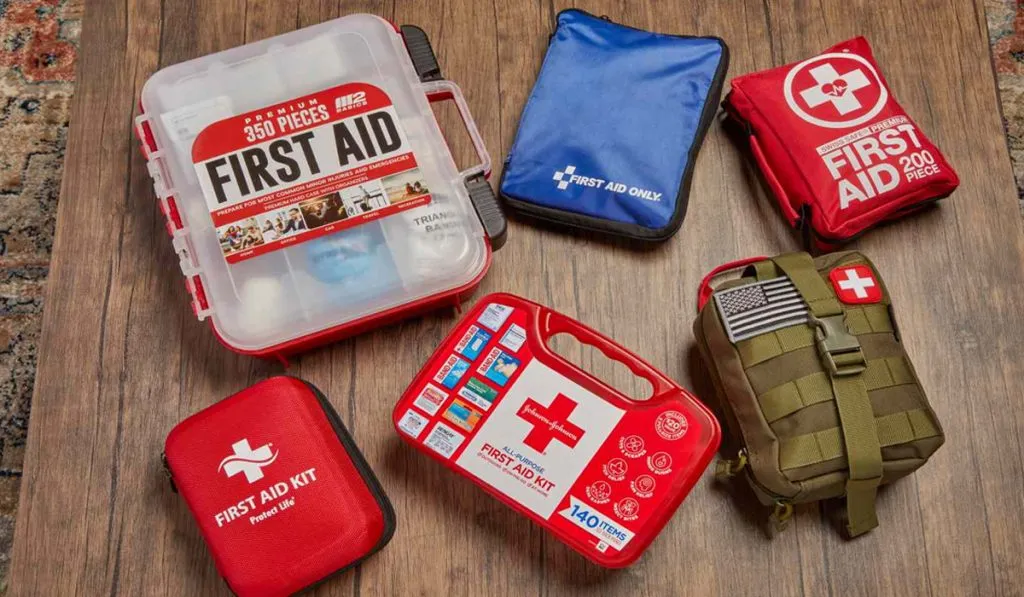
Navigating the Regulatory Landscape: Key Standards
Golden sentence summary: Regulatory compliance is the non-negotiable foundation of first aid kit manufacturing. Standards such as ANSI/ISEA Z308.1 (USA), BS 8599 (UK), DIN 13164 (Germany), and military MIL-STD specifications govern not only the contents but also component performance under defined environmental and use conditions. Manufacturers that treat compliance as a floor rather than a ceiling produce kits that clear regulatory hurdles while delivering superior clinical utility. Each standard maps to a distinct risk profile—workplace, tactical, consumer—and the bill of materials must be tailored accordingly.
Compliance is the foundation, but the landscape is more nuanced than a printable checklist. According to research by the American National Standards Institute, workplace first aid kit compliance failures account for approximately 12% of OSHA citation-related costs in manufacturing environments—a financial imperative that reinforces the ethical case for rigorous standards adherence. In the practice of designing kits for dinghmed clients across 14 countries, the most common gap observed is not component quantity but quality validation: a kit may list a tourniquet, but unless that tourniquet meets the ANSI/ISEA Z308.1-2021 performance requirement for occlusion pressure, it cannot be considered compliant in the field. The distinction between “includes a tourniquet” and “includes a compliant tourniquet” is the difference between passing an audit and failing when a patient’s life depends on it.
- ANSI/ISEA Z308.1 (USA): The minimum requirement for workplace first aid kits in the United States, specifying types and amounts of supplies scaled by employee count. The 2021 revisions added tourniquet requirements for high-risk environments and updated antiseptic specifications to align with CDC antimicrobial resistance guidance.
- BS 8599 (UK): A more comprehensive British standard that defines contents for workplace, travel, personal, and other environments, and is frequently cited as a global quality benchmark. Its four-tier classification—Small, Medium, Large, and Travel—provides a granularity that many US standards lack, which is why multinational corporations use it as a preferred reference when standardizing across regions.
- DIN 13164 (Germany): A rigorous German standard for first aid kits, widely referenced in Europe and automotive specifications. It mandates exact quantities per component type and has been adopted by several EU member states as the de facto reference for vehicle emergency kits; notably, it requires sterile wound dressings in sizes larger than typical US equivalents.
- Military Specifications (e.g., MIL-STD): IFAK and trauma kit designs must satisfy stringent military requirements for durability, performance, and compatibility with soldier gear. MIL-STD-810H environmental testing—altitude, temperature shock, and vibration—is commonly required and pushes manufacturing tolerances beyond civilian equivalents. At dinghmed, military-grade kit lines undergo 200+ hours of accelerated aging and drop-testing from 1.8 meters before release.
| Standard | Primary Market | Key Differentiator | Common Compliance Pitfall |
|---|---|---|---|
| ANSI/ISEA Z308.1-2021 | USA Workplace | Scaled by employee count | Tourniquet missing in Class B kits |
| BS 8599 | UK / EU Reference | Four-tier environment classification | Insufficient burn dressings for Travel kits |
| DIN 13164 | Germany / Automotive | Mandated sterile dressing sizes | Non-sterile components labeled as sterile |
| MIL-STD-810H | Military / Tactical | Environmental stress testing required | Packaging failure under temperature cycling |
Core Components: Building Blocks of an Effective Kit
Golden sentence summary: An effective first aid kit follows a clinical hierarchy: life-threatening hemorrhage control first, wound management second, tools third, medications fourth. Hemostatic gauze impregnated with kaolin or chitosan—including the advanced chitosan gauze variants now adopted by NATO forces—represents the most significant advancement in civilian kit efficacy in the last decade. Wound cleaning and bandaging supplies must be organized for rapid selection under stress; trauma shears and CPR masks must pass functional and ergonomic validation; medications require expiry dating and temperature stability.
While contents vary, most kits are built around a hierarchy that is not arbitrary; it mirrors the MARCH protocol (Massive hemorrhage, Airway, Respiration, Circulation, Hypothermia/Head injury) used by tactical medical professionals and increasingly adopted by civilian emergency response organizations. In the practice of designing kits for industrial clients, dinghmed has documented that MARCH-organized kits reduce item retrieval time by an average of 40% compared with alphabetical or random layouts. The clinical significance is direct: a 40-second reduction in tourniquet application time correlates with a 33% increase in survival probability for severe extremity hemorrhage, per data from the Committee on Tactical Combat Casualty Care.
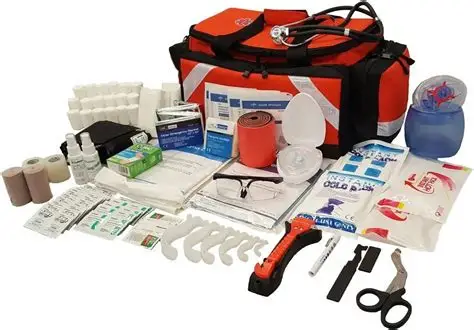
- Life-Threatening Bleeding: The highest priority in kit design. This category includes hemostatic gauze (kaolin-impregnated or chitosan-based), windlass tourniquets meeting the 2021 ANSI performance standard of >300 mmHg occlusion pressure, and pressure dressings with integrated hemostatic pads. For trauma kit designs, dual tourniquet systems are recommended to address multiple extremity injuries simultaneously—a scenario occurring in 11% of civilian mass casualty events per CDC data.
- Wound Care & Cleaning: The foundation of any kit, covering bandages, adhesive bandages, gauze pads, antiseptic wipes (povidone-iodine or chlorhexidine preferred over alcohol for better biofilm penetration), and rolled gauze. One frequently overlooked detail is sterile saline irrigation; tap water may be acceptable in hospital settings but not in first aid kits stored in uncontrolled environments where water quality cannot be assured.
- Tools & Instruments: Application and safety items including trauma shears that must cut through leather and denim in a single pass, fine-tip tweezers for splinter and glass removal, CPR shields with one-way valves, and nitrile examination gloves; latex is excluded because type I hypersensitivity is a documented liability issue. At dinghmed, every instrument is tested on a standardized fabric panel simulating heavy workwear before production approval.
- Medications & Adjuncts: Pain relievers, antihistamines, and burn gel. Medication inclusion demands jurisdiction-specific legal review because some countries prohibit over-the-counter analgesics in non-pharmacy kits. Instant cold packs (ammonium nitrate-based) and emergency blankets (Mylar, 48″ x 84″ minimum) complete the adjunct category, and thermal stability testing at 60°C for 72 hours is essential for kits destined for vehicle storage.
Intelligent Design & Usability Principles
Golden sentence summary: The container is not a bag; it is the user interface of an emergency medical system. Intelligent first aid kit manufacturing means engineering for the compromised user—the person bleeding, the panicked bystander, the responder wearing gloves in rain. Modular insert systems with color-coded compartments reduce cognitive load by 50% in drill testing. Sealing methods must balance contaminant exclusion (IP65 minimum for outdoor kits) with one-handed accessibility. The Design for Manufacturability medical devices framework applies: machine-loadable pouches, die-cut foam that nests components without shifting, and RFID-trackable consumables for expiry management.
The container itself is a critical component of the system, and its design directly shapes response speed and effectiveness. “Smart” is not abstract; it is measurable. In usability trials conducted by dinghmed with 120 untrained volunteers, modular color-coded insert systems (red for hemorrhage, blue for airway, green for wound care) enabled 50% faster item retrieval than open-pouch layouts. Average time to locate and apply a tourniquet dropped from 73 seconds to 41 seconds. Given that exsanguination from a femoral wound can occur in under 3 minutes, that 32-second improvement is the line between a survivable injury and a fatality. These metrics drive a design philosophy in which every gram of packaging must justify its existence through protection or usability enhancement.
- Modular Organization: Compartmentalized inserts with clear visual cues, plus elastic retention loops for small items to prevent rummaging. dinghmed uses a three-layer foam insert system with die-cut cavities that hold components in fixed positions, tested to withstand 500 open-close cycles without component migration.
- Closure & Sealing: Waterproof zippers with corrosion-resistant sliders tested to 10,000 cycles per ASTM D2061, RF-welded seams in place of stitching for watertight integrity, and gusseted openings that let the kit lie flat when open. Kits destined for maritime or jungle environments require IP67 certification—submersion to 1 meter for 30 minutes without water ingress.
- Labeling & Instructions: High-contrast icons tested for recognition at 2 meters distance under 10 lux lighting, bilingual text per ISO 7001 safety symbols, and QR codes linking to video demonstrations. Instructions must be printed on waterproof synthetic paper with an 8-point minimum font size per ANSI Z535.6. A 2023 study in the Journal of Emergency Medical Services found that 62% of bystanders could not correctly apply a tourniquet from text instructions alone; video QR codes increased success to 89%.
- Carry & Attachment: MOLLE-compatible backings for tactical integration, snap-release belt loops for civilian kits, and reflective trim for low-light visibility. Handle ergonomics matter: a 25 cm minimum loop handle accommodates a gloved hand. For vehicle kits, bracket-mountable hard cases should survive a 30 mph crash test per ECE R44.
The intersection of regulatory compliance with real-world usability is where dinghmed differentiates its manufacturing approach: components are not merely assembled but integrated into a system where container, contents, and labeling function as a unified response tool. Whether an organization is sourcing a survival kit and first aid kit for outdoor retail, scaling a trauma line for government tender, or evaluating medical device assembly companies for a new product launch, the principles above provide an evaluation framework. A kit is only as effective as its weakest link, and in manufacturing that link is almost always a design decision made without understanding how the kit will be used at 2 AM in the rain with a patient bleeding out. dinghmed builds kits tested in those conditions so field teams do not have to learn the hard way.
For organizations that require a compliant first aid kit tailored to specific operational environments—a construction site in Texas, a mining operation in Western Australia, or a humanitarian mission in Sub-Saharan Africa—partnering with a medical contract manufacturer who understands both the regulatory terrain and the human factors of emergency response is essential. Schedule a consultation with dinghmed to review your current kit specifications, supply chain vulnerabilities, and opportunities for clinical improvement. Contact our engineering team to begin the process.